Our academic staff are highly research active, with awards for teaching and research excellence. The College of Sciences also attracts high numbers of postgraduate research students for its master's and doctoral degrees.
Our researchers and research students work collaboratively across disciplines and with experts around New Zealand and the world. We have extensive international collaborations and an impressive history of commercialising our results.
Our researchers win grants and other funding from prestigious sources such as the Royal Society of New Zealand's Marsden Fund Te Pūtea Rangahau and the Ministry of Business, Innovation and Enterprise (MBIE) for applied research.
Research clusters and groups
Centre for Energy Research
The Centre for Energy Research aims to provide sustainable energy solutions. Our research projects are linked with industry and local or national government.
Centre for Organisational Excellence Research (COER)
In partnership with Massey University and BPIR.com, COER administers doctoral research programmes in business excellence, benchmarking, productivity and innovation.
EpiCentre
A World Organisation for Animal Health (WOAH) Collaborating Centre since 2014, providing world-class research, service and teaching in epidemiology, biosecurity and public health.
mEpiLab
Massey University’s Molecular Epidemiology and Public Health Laboratory (mEpiLab) develops and applies new techniques to inform decision-making and guide the prevention and control of infectious disease.
Industrial management & innovation research
Our researchers investigate methods of product and service design, development, delivery, packaging and distribution.
Innovative River Solutions
Researching river channel environments to provide solutions for the management of New Zealand’s dynamic river systems.
New Zealand Biochar Research Centre
New Zealand Biochar Research Centre aims to advance the understanding of biochar for mitigating global climate change.
New Zealand Institute for Advanced Study
The New Zealand Institute for Advanced Study aspires to be one of the world's leading centres in curiosity-driven fundamental research.
MAF Digital Lab
MAF (Massey AgriFood) Digital Lab is a solution focussed research group developing applications of advanced technology within the primary production, agricultural and food supply chain.
Palynology Lab
Massey operates a world-class palynology laboratory, studying and analyzing pollen samples.
Working Dog Centre
Improving the health, working life and well-being of service and working dogs through collaborative science and communication.
Research centres and clinics

Volcanic Risk Solutions
During volcanic events, we provide rapid scientific information to local governments, businesses and farms. We also develop scientific advances in volcanology within practical risk-management strategies for New Zealand and Southwest Pacific communities, business enterprises and government agencies.
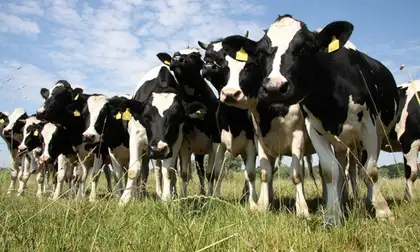
AL Rae Centre for Genetics and Breeding
The centre ensures sustained development and application of knowledge in quantitative genetics and breeding to enhance the profitability of New Zealand's primary industries.
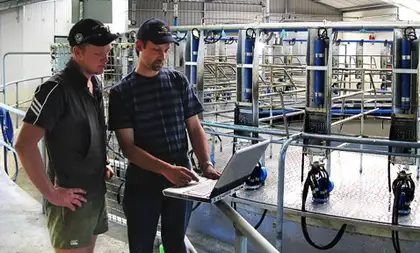
Farmed Landscapes Research Centre
Massey University's Farmed Landscapes Research Centre engages in teaching and research on soils, fertilisers and environmental issues in agriculture, horticulture and forestry.

FoodPILOT
Learn to create and test food and nutrition products, using industrial-standard processing equipment such as:
- extruders
- high-pressure processors
- pasteurising equipment
- sterilisation equipment.
Businesses from boutique makers to exporters use FoodPILOT to turn ideas into reality.
Location: Manawatū campus

New Zealand Life Cycle Management Centre
The centre is a collaboration between Massey University, AgResearch, Landcare Research, Plant & Food Research and SCION. It works to build capability in life cycle management (LCM) by providing education, training and research to LCM professionals to meet increasing consumer demand for green metrics on products.
Other research teams
Massey's staff and research students create and share new knowledge.
Artificial intelligence for automating responses to cybersecurity threats
AI can be a powerful tool to combat emerging cyber threats. Massey's Cybersecurity Lab works with Data61 (CSIRO, Australia) and top trans-Tasman universities to develop AI solutions.
These use the latest in machine learning and deep learning techniques to detect, classify, and respond rapidly against network intrusions and malware attacks.
mEpiLab
Massey's Molecular Epidemiology and Public Health Laboratory (mEpiLab) focuses on the prevention and control of infectious diseases. We develop and apply new techniques to inform decision-making and improve the health of all New Zealanders.
Productivity in built environments
Research themes include digitisation, health and safety, off-site construction, and project management.
Research includes the flagship five-year programme Creating Capacity and Capability for the New Zealand Construction Sector. The aim is to boost:
- investor confidence in delivery
- stability of construction companies and resource planning
- confidence for people seeking training and education to work in construction.
Tāhuri Whenua – National Māori Vegetable Growers Collective
Massey staff are on the Tāhuri Whenua National Committee. This group represents Māori interests in the horticulture sector and provides information for growers, books, projects and contacts for regional activity.
Telecommunication and Network Engineering Research Group
The Telecommunication and Network Engineering Research Group works on issues pertinent to the next generation of communication networks. Our focus areas include 5G Cellular Networks, software-defined networking, energy harvesting and green communication.
Related content
Themes & research strengths
Our research focuses on solutions to real-world problems with national and global impact.
Research & specialist centres
Explore the research and specialist centres promoting innovation, technology transfer, and connections with a wide network of research and academic institutions.
Public clinics & services
Benefit from Massey's expertise with our affordably-priced public clinics and services.